
Most exterior cleaning decisions start with what can be seen. A gutter overflowing during rain. A driveway that has gone dark. Siding that looks worse every season. The visible condition becomes the reason to act. What is usually happening underneath that visible layer is a different story. The overflow started before the debris became obvious. The driveway darkened through a long accumulation process, not a single event. The siding changed because moisture and environmental material kept building over multiple seasons without being interrupted. J Gutter Cleaning and Power Washing works from that understanding. The surface condition is not the starting point. It is the result of how the property has been responding to water movement and environmental exposure over time. That is where the work begins.
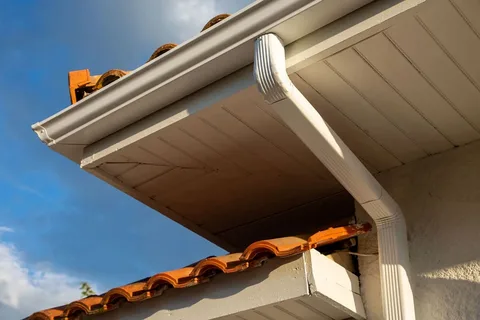
We are a gutter cleaning and pressure washing company serving residential properties in a small town in Camden County.
The work covers two systems. Gutter systems that move water from the roofline through downspouts and away from the structure. Exterior surfaces that accumulate environmental material over time and need to be restored without damaging the material underneath.
Both systems are approached the same way. Before any cleaning starts, we look at how the property is actually behaving. What the drainage pattern looks like. Where buildup has been developing. How long the surface has been in its current condition. The cleaning method follows from that observation, not from a fixed routine applied to every job the same way.
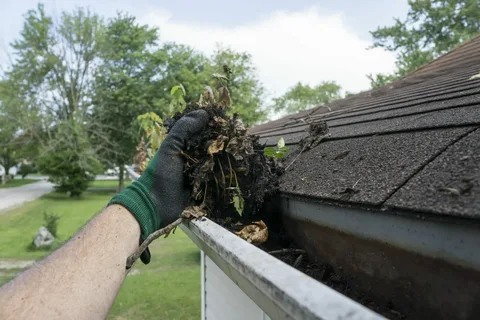
A gutter system does not stop working in one moment. It slows down in stages. Flow becomes uneven across sections. Water starts finding alternative paths along roof edges. Downspouts begin receiving inconsistent volume from different parts of the channel.
By the time overflow becomes visible from the ground, the system has already been compensating for restriction over a longer period. The visible failure is not where the problem started.
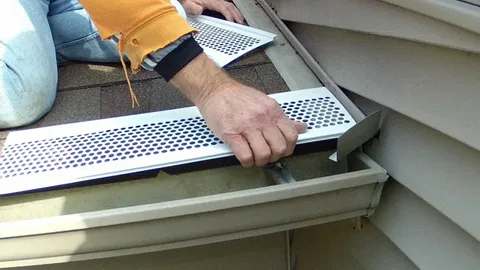
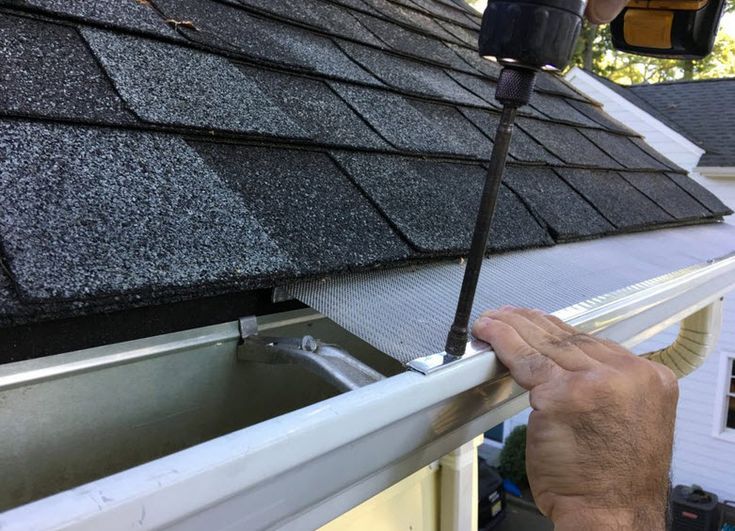
We look at the full drainage path before cleaning begins. Where flow is slowing. Where debris tends to collect based on roof slope and entry points. How the system is distributing water across multiple sections. Corners and downspout entry zones are usually where restriction builds first, because those are the points where water loses momentum or pressure concentrates. Cleaning is applied to restore how water moves through the system from entry to exit. Not just to remove what is visible at a single point in the channel.
Exterior surfaces do not become dirty from one exposure event. They change because they slowly stop releasing environmental material between cycles.
Early on, rainfall removes a portion of what settles on a surface. The material still sheds. Over time, residue begins staying longer. Then new layers arrive before older layers leave. At that point, the surface has shifted from releasing material to storing it. Visible staining follows. But the shift happened long before the discoloration became obvious.
Two properties on the same street can look completely different despite sharing the same weather. One sits under mature trees that introduce organic material across multiple seasons. Another has a driveway that collects roof runoff along a concentrated path. A shaded wall holds moisture longer than an open wall a few feet away. These differences shape how each surface accumulates over time.
We look at what type of material has built up, how long it has been developing, and what the surface is made of. Concrete, brick, siding, and walkways do not all respond to pressure the same way. Applying uniform pressure across all materials produces uneven results. The method is matched to what the surface actually needs.
Exterior cleaning results depend more on how the work is done than on how much effort goes into it. A gutter that keeps clogging in the same location is not a random problem. Debris accumulates in predictable zones based on roof slope, entry point location, and where flow slows. Cleaning that addresses visible debris without understanding those zones will produce the same result the next season.
A surface that stains again shortly after pressure washing was not fully addressed. The visible material was removed. The underlying accumulation pattern that caused it was not interrupted. The surface returned to its previous condition because the conditions that created it were still operating.
Working from condition observation rather than appearance alone changes what the cleaning accomplishes. The system performs more consistently. The surface holds its condition longer between service visits. The result is more stable than what a standard cleaning routine produces.
The speed of contamination development is usually influenced by exposure conditions, moisture retention patterns, vegetation, runoff behavior, and how efficiently the surface releases environmental residue.
Age is only one factor. The contamination history of each surface is often very different due to the surrounding environmental conditions.
Exposure refers to contact with environmental conditions. Accumulation refers to material remaining on the surface after exposure has occurred.
Most maintenance decisions are triggered by appearance. Visible discoloration often develops much later than the accumulation process itself.
The purpose is to remove established accumulation that has developed through repeated environmental exposure cycles and restore a cleaner exterior surface condition.